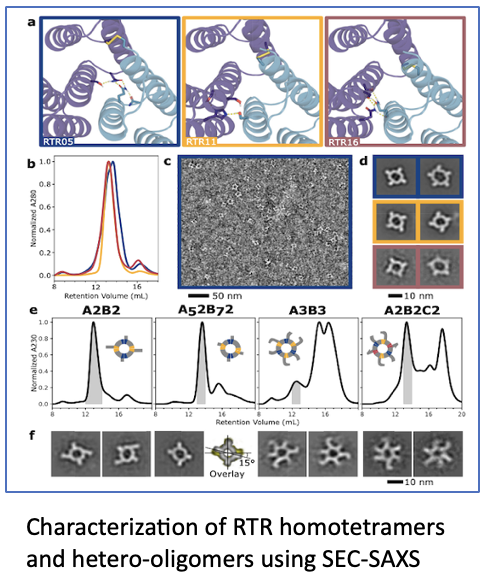
Researchers with JCSG have recently determined the structure of TadZ bound to ATP. This new PDB along with the structures of other pilins and pilin associated proteins have been chosen as the PSI featured system of the month for April. Bacteria typically have a large number of genes that encode proteins for the synthesis, localization and assembly of these pilins. The role of pili in bacterial pathogenesis has made understanding them an exciting area of research. In addition to the recent JCSG structure, the PSI feature article also highlights the 1ay2 structure solved in the Tainer lab in 1995, and published in Nature. The following image of 3fkq was created by David Goodsell

3fkq.png

Xu, Q. et al. “Structure of the pilus assembly protein TadZ from Eubacterium rectale: implications for polar localization.” Mol. Microbiol. 83, 712-727 (2012).

Researchers from Scripps Research Institute and the University of Glasgow have published a detailed molecular model of how UVR8, a unique heme-free plant photoreceptor, senses UV-B light via an intricate interacting mesh of Tryptophan residues positioned at the UVR8 dimer interface which ultimately results in the disruption of a salt bridge and dissociation of the UVR8 dimer.

uvr8_science_highlight.jpg

The recently identified plant photoreceptor UVR8 triggers regulatory changes in gene expression in response to ultraviolet-B (UV-B) light via an unknown mechanism. Here, crystallographic and solution structures of the UVR8 homodimer, together with mutagenesis and far-UV circular dichroism spectroscopy, reveal its mechanisms for UV-B perception and signal transduction. β-propeller subunits form a remarkable, tryptophan-dominated, dimer interface stitched together by a complex salt-bridge network. Salt-bridging arginines flank the excitonically coupled cross-dimer tryptophan “pyramid” responsible for UV-B sensing. Photoreception reversibly disrupts salt bridges, triggering dimer dissociation and signal initiation. Mutation of a single tryptophan to phenylalanine retunes the photoreceptor to detect UV-C wavelengths. Our analyses establish how UVR8 functions as a photoreceptor without a prosthetic chromophore to promote plant development and survival in sunlight.

Christie, J. M., Arvai, A. S., Baxter, K. J., Heilmann, M., Pratt, A. J., O’Hara, A., Kelly, S. M., Hothorn, M., Smith, B. O., Hitomi, K., Jenkins, G. I., Getzoff, D. G.”Plant UVR8 Photoreceptor Senses UV-B by Tryptophan-Mediated Disruption of Cross-Dimer Salt Bridges” Science. Published Online February 9 2012

Members of the Noller lab recently published a 3.3 Å resolution structure of a complex containing the ribosomal release factor (RF3) locked in its GTP-bound state (mimicked using GDPNP) in association with the E. coli 70s ribosome. Crystallographic data for this project was collected at the SIBYLS beamline MX station.

The class II release factor RF3 is a GTPase related to elongation factor EF-G, which catalyzes release of class I release factors RF1 and RF2 from the ribosome after termination of protein synthesis. The 3.3 Å crystal structure of the RF3·GDPNP·ribosome complex provides a high-resolution description of interactions and structural rearrangements that occur when binding of this translational GTPase induces large-scale rotational movements in the ribosome. RF3 induces a 7° rotation of the body and 14° rotation of the head of the 30S ribosomal subunit, and itself undergoes inter- and intradomain conformational rearrangements. We suggest that ordering of critical elements of switch loop I and the P loop, which help to form the GTPase catalytic site, are caused by interactions between the G domain of RF3 and the sarcin-ricin loop of 23S rRNA. The rotational movements in the ribosome induced by RF3, and its distinctly different binding orientation to the sarcin-ricin loop of 23S rRNA, raise interesting implications for the mechanism of action of EF-G in translocation.


jie_ribosome.jpg

Zhou, J., Lancaster, L., Trakhanov, S., & Noller, H. F. “Crystal structure of release factor RF3 trapped in the GTP state on a rotated conformation of the ribosome.” RNA (New York, NY), 18(2), 230-240.

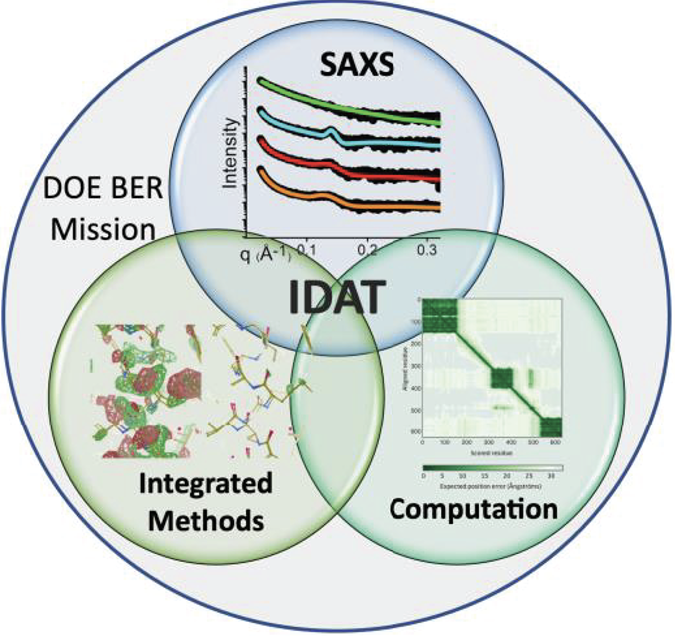
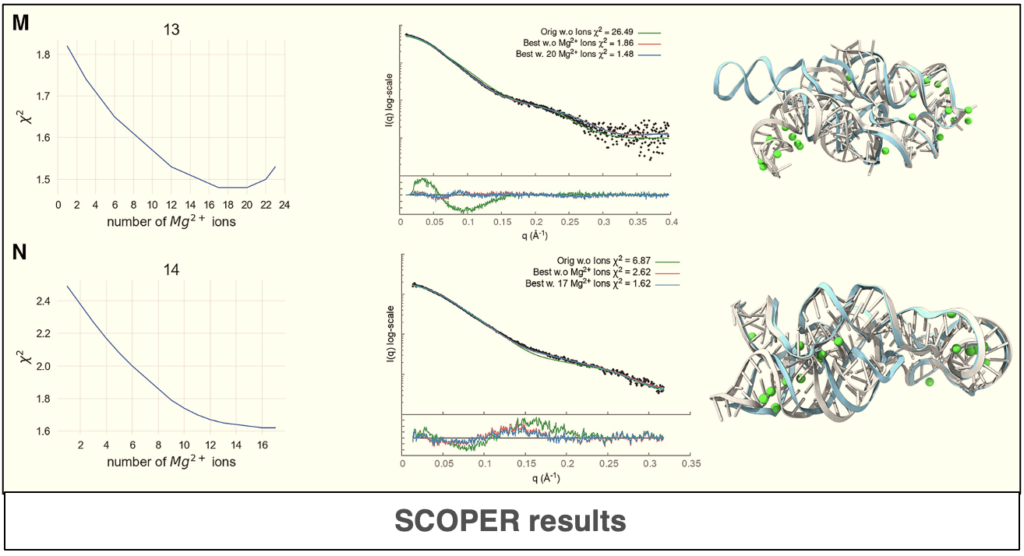
Tsutakawa et al. have combined solution Small Angle X-ray Scattering (SAXS) data collected at the SIBYLS beamline with computational modeling carried out at Oak Ridge Leadership Computing Facility ( OLCF ) to elucidate new modes of flexibility in a key protein complex (Ubiquitin-PCNA) involved in DNA replication and repair. The work was published in the Oct 25th issue of PNAS, and has been highlighted by OLCF and the Faculty of 1000.

ub-pcna-brownian.tif

PCNA ubiquitination in response to DNA damage leads to the recruitment of specialized translesion polymerases to the damage locus. This constitutes one of the initial steps in translesion synthesis (TLS)-a critical pathway for cell survival and for maintenance of genome stability. The recent crystal structure of ubiquitinated PCNA (Ub-PCNA) sheds light on the mode of association between the two proteins but also revealed that paradoxically, the ubiquitin surface engaged in PCNA interactions was the same as the surface implicated in translesion polymerase binding. This finding implied a degree of flexibility inherent in the Ub-PCNA complex that would allow it to transition into a conformation competent to bind the TLS polymerase. To address the issue of segmental flexibility, we combined multiscale computational modeling and small angle X-ray scattering. This combined strategy revealed alternative positions for ubiquitin to reside on the surface of the PCNA homotrimer, distinct from the position identified in the crystal structure. Two mutations originally identified in genetic screens and known to interfere with TLS are positioned directly beneath the bound ubiquitin in the alternative models. These computationally derived positions, in an ensemble with the crystallographic and flexible positions, provided the best fit to the solution scattering, indicating that ubiquitin dynamically associated with PCNA and is capable of transitioning between a few discrete sites on the PCNA surface. The finding of new docking sites and the positional equilibrium of PCNA-Ub occurring in solution provide unexpected insight into previously unexplained biological observations

Tsutakawa SE, Van Wynsberghe AW, Freudenthal BD, Weinacht CP, Gakhar L, Washington MT, Zhuang Z, Tainer JA, Ivanov I. “Solution X-ray scattering combined with computational modeling reveals multiple conformations of covalently bound ubiquitin on PCNA.” Proc Natl Acad Sci U S A. 2011 Oct 17.

SAXS data collected at the SIBYLS beamline was used in conjunction with high resolution crystals structures to discern details of the unique interaction mode of of these key players in the autophagy pathway.


Mol_Cell_Nov4_2011.jpg

Atg7 is a noncanonical, homodimeric E1 enzyme that interacts with the noncanonical E2 enzyme, Atg3, to mediate conjugation of the ubiquitin-like protein (UBL) Atg8 during autophagy. Here we report that the unique N-terminal domain of Atg7 (Atg7NTD) recruits a unique “flexible region” from Atg3 (Atg3FR). The structure of an Atg7NTD-Atg3FR complex reveals hydrophobic residues from Atg3 engaging a conserved groove in Atg7, important for Atg8 conjugation. We also report the structure of the homodimeric Atg7 C-terminal domain, which is homologous to canonical E1s and bacterial antecedents. The structures, SAXS, and crosslinking data allow modeling of a full-length, dimeric (Atg7∼Atg8-Atg3)2 complex. The model and biochemical data provide a rationale for Atg7 dimerization: Atg8 is transferred in trans from the catalytic cysteine of one Atg7 protomer to Atg3 bound to the N-terminal domain of the opposite Atg7 protomer within the homodimer. The studies reveal a distinctive E1∼UBL-E2 architecture for enzymes mediating autophagy.

Taherbhoy AM, Tait SW, Kaiser SE, Williams AH, Deng A, Nourse A, Hammel M, Kurinov I, Rock CO, Green DR, Schulman BA. “Atg8 transfer from atg7 to atg3: a distinctive e1-e2 architecture and mechanism in the autophagy pathway.” Mol Cell 2011 Nov.;44(3):451-461.

Using data collected at the SIBYLS beamline members of the Beese Lab have demonstrated that high fidelity polymerases can stabilize certain tautomeric forms of mismatched base pairs ultimately resulting in incorporation of mutations into the DNA duplex.

Even though high-fidelity polymerases copy DNA with remarkable accuracy, some base-pair mismatches are incorporated at low frequency, leading to spontaneous mutagenesis. Using high-resolution X-ray crystallographic analysis of a DNA polymerase that catalyzes replication in crystals, The Beese Lab has observed that a C•A mismatch can mimic the shape of cognate base pairs at the site of incorporation. This shape mimicry enables the mismatch to evade the error detection mechanisms of the polymerase, which would normally either prevent mismatch incorporation or promote its nucleolytic excision. Movement of a single proton on one of the mismatched bases alters the hydrogen-bonding pattern such that a base pair forms with an overall shape that is virtually indistinguishable from a canonical, Watson-Crick base pair in double-stranded DNA. These observations provide structural evidence for the rare tautomer hypothesis of spontaneous mutagenesis, a long-standing concept that has been difficult to demonstrate directly.

Wang W, Hellinga HW, Beese LS. “Structural evidence for the rare tautomer hypothesis of spontaneous mutagenesis.” Proceedings of the National Academy of Sciences 2011 Oct.;108(43):17644-17648.

JBCCover_Sept_16_2011.jpg

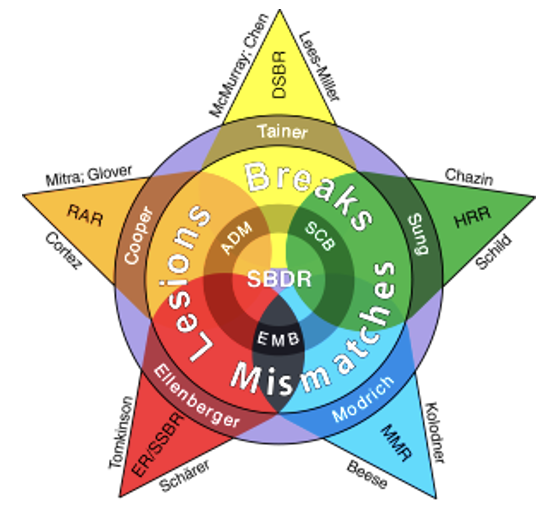
DNA double strand break repair via nonhomologous end joining is a critical regulatory function that maintains genomic integrity. One of the major factors involved in this process is the XLF-XRCC4 protein complex. Although mutation of either XLF or XRCC4 leads to defects in break repair, the function of the XLF-XRCC4 complex has remained enigmatic. In their Paper of the Week, Hammel et al. used structure-based methods to elucidate the mechanism by which XLF-XRCC4 promotes double strand break repair. The authors solved the crystal structure of the XLF-XRCC4 complex using the N-terminal head domains of each protein and identified two key structural features that stabilize the complex: a key-lock interaction that links the two proteins and a set of hydrogen-bonding interactions that supplement the key-lock bond. Furthermore, the authors found that the C-terminal domain of XLF was crucial for promoting the formation and extension of filaments of the XLF-XRCC4 complex, allowing for interaction with DNA in a concentration-dependent manner. The crystal structure also identified a putative DNA-binding region, located at the XLF-XRCC4 interface, which was confirmed through addition of DNA oligomers. Subsequent addition of the break repair complex nucleator Ku and DNA ligase IV allowed the authors to develop a model for nonhomologous end joining in which Ku initially binds the damaged DNA site and recruits the XLF-XRCC4 complex, which is necessary for proper alignment of damaged DNA for repair by DNA ligase IV. Importantly, the elucidation of the structure of the XLF-XRCC4 scaffold provides potential targets for anticancer therapeutics.

Hammel M, Rey M, Yu Y, Mani RS, Classen S, Liu M, Pique ME, Fang S, Mahaney BL, Weinfeld M, Schriemer DC, Lees-Miller SP, Tainer JA. “XRCC4 protein interactions with XRCC4-like factor (XLF) create an extended grooved scaffold for DNA ligation and double strand break repair.” J Biol Chem. 2011 Sep 16;286(37):32638-50. Epub 2011 Jul 20.

ALS Ring Status

loading ...
als current sparkline

Funding

Photos

  • 3fkq.png
  • uvr8_science_highlight.jpg
  • jie_ribosome.jpg
  • sibyls.jpg
  • ub-pcna-brownian.tif
  • JBCCover_Sept_16_2011.jpg
  • Mol_Cell_Nov4_2011.jpg
  • hammel_jbc_cover.jpg
  • QuestionSix.jpg
  • QuestionFive.jpg

Archives

Powered by Movable Type 5.12

April 2012

Sun Mon Tue Wed Thu Fri Sat
1 2 3 4 5 6 7
8 9 10 11 12 13 14
15 16 17 18 19 20 21
22 23 24 25 26 27 28
29 30